
Cystocalm: Uses, Sachets, Ingredients, Side Effects & How It Works
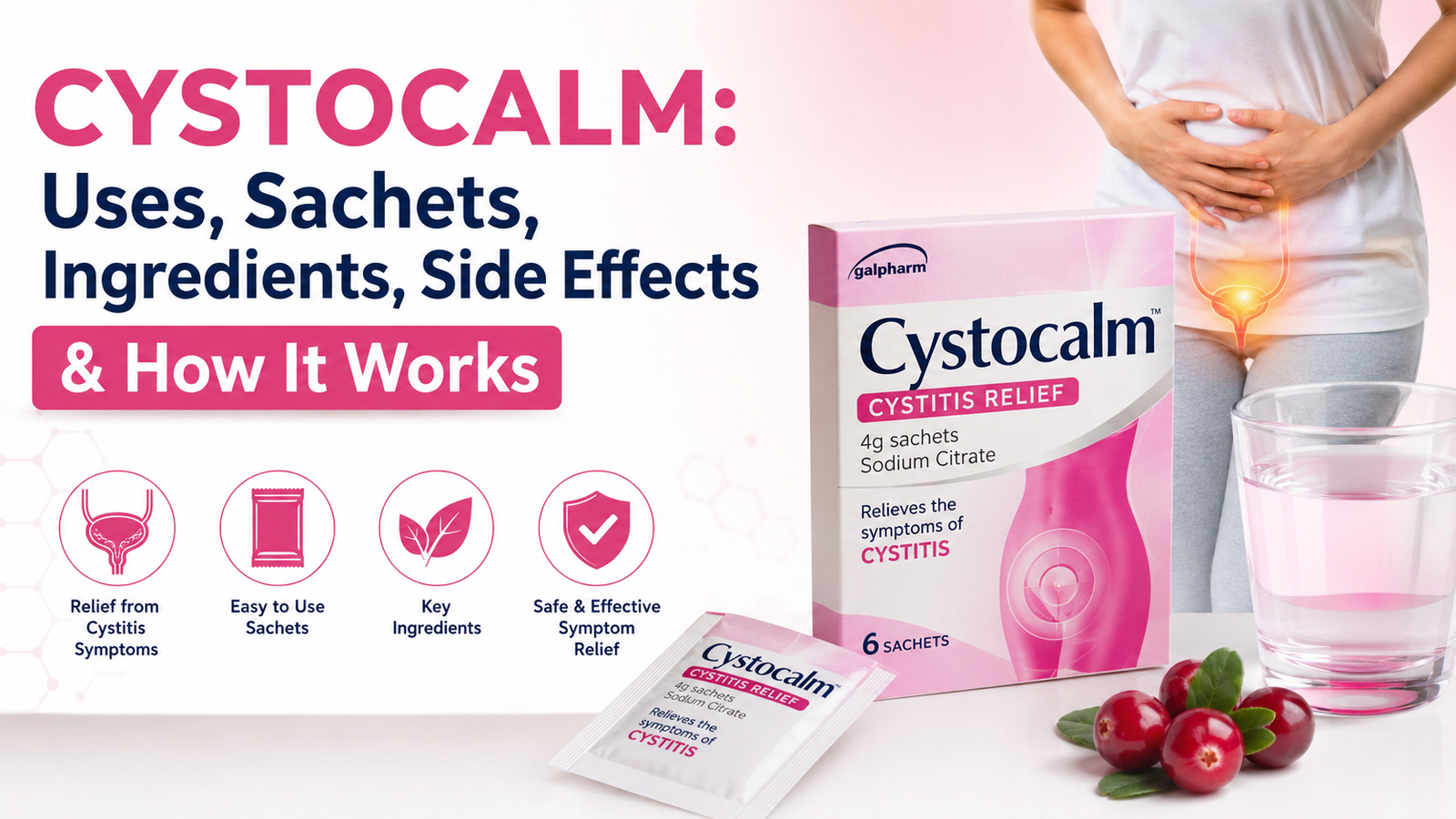
If you are looking for quick relief from the burning, stinging and discomfort associated with cystitis, Cystocalm is one of the UK products you may come across. It is supplied as sachets containing sodium citrate, which works by making urine less acidic and can help ease the uncomfortable symptoms of cystitis.
This guide explains Cystocalm, including what Cystocalm is used for, how Cystocalm sachets are taken, Cystocalm ingredients, possible Cystocalm side effects, how long Cystocalm takes to work, and common questions such as whether Cystocalm is suitable for men.
What Is Cystocalm Used For?
Cystocalm is a medicine designed to provide symptomatic relief from cystitis in adult women. Cystitis can cause burning or stinging when passing urine, irritation and the need to urinate more frequently. Cystocalm contains sodium citrate, which makes urine less acidic and may make passing urine more comfortable.
It is important to understand that Cystocalm does not treat the underlying cause of a bacterial UTI. It is intended to relieve symptoms rather than replace medical assessment or antibiotic treatment when an infection requires it. Boots similarly explains that cystitis relief sachets are for symptoms such as burning and stinging rather than treating the underlying infection.
Cystocalm Sachets: What You Need to Know
Cystocalm sachets contain granules that are dissolved in water before drinking. The UK patient leaflet states that the usual adult-women dose is one sachet dissolved in a glass of water, taken three times a day for two days. The pack contains six sachets, making up the stated two-day course.
| Cystocalm information | Details |
|---|---|
| Form | Granules for oral solution |
| Pack size | 6 sachets |
| Active ingredient | Sodium citrate dihydrate |
| Amount per sachet | 4 g |
| Flavour | Cranberry |
| Intended users | Adult women |
| Course stated in leaflet | 2 days |
| Main purpose | Relief of cystitis symptoms |
Always read the current leaflet supplied with your pack before using Cystocalm, because product information can be updated. The medicine should not be taken above the stated dose.
Cystocalm Ingredients
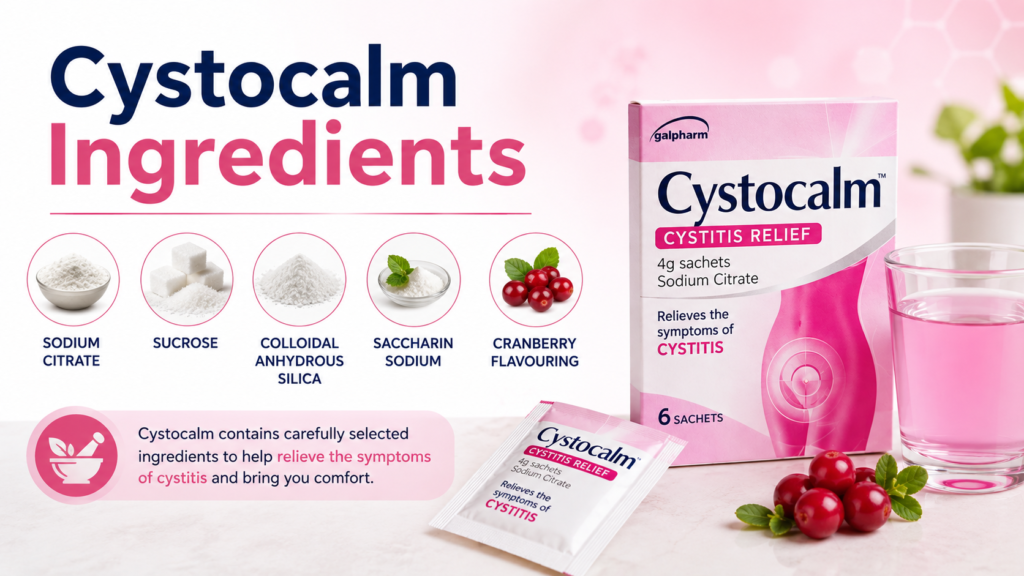
The main Cystocalm ingredient is sodium citrate dihydrate. Each 5.6 g sachet contains 4 g of sodium citrate dihydrate. Other listed ingredients include sucrose, colloidal anhydrous silica, saccharin sodium and cranberry flavouring.
Each sachet also contains a significant amount of sodium, so Cystocalm may not be suitable for people who need to follow a controlled-sodium diet. The current Boots leaflet states that each sachet contains 939 mg of sodium.
How Does Cystocalm Work?
The reason Cystocalm can help with cystitis discomfort is linked to its sodium citrate content. Sodium citrate makes urine less acidic, which can help reduce the unpleasant burning or stinging sensation experienced when passing urine.
This distinction matters: Cystocalm is mainly about symptom relief. If cystitis is caused by an infection, reducing acidity does not necessarily remove the infection itself. If symptoms continue, worsen or repeatedly return, medical advice is important.
How to Take Cystocalm
Using Cystocalm sachets is straightforward, but the instructions should always be checked against the leaflet in your own pack.
The UK leaflet states:
- Dissolve the contents of one sachet in a glass of water.
- Drink the solution after dissolving it.
- Adult women take one sachet three times daily.
- The stated course lasts two days.
- Do not exceed the recommended dose.
- Do not repeat the course without medical advice if symptoms persist.
The sachet should also be checked before use. If it is damaged or broken, it should not be used.
How Long Does Cystocalm Take to Work?
A common search is how long does Cystocalm take to work. There is no reliable single number of minutes or hours that applies to everyone. The purpose of Cystocalm is to relieve symptoms by reducing urine acidity, so improvement can vary between individuals.
If symptoms are not improving or become worse, do not simply keep taking Cystocalm. The patient leaflet advises contacting a doctor if symptoms continue for more than four days after starting treatment or keep recurring.
So, when asking does Cystocalm work, it is better to think of it as a product for temporary symptom relief rather than a guaranteed cure for the cause of cystitis.
Cystocalm for UTI: Does It Help?
People often search for Cystocalm for UTI because cystitis symptoms can occur as part of a urinary tract infection. Cystocalm can help relieve discomfort associated with cystitis, particularly burning or stinging when urinating.
However, Cystocalm for UTI does not mean that the product eliminates a bacterial infection. If a UTI needs medical treatment, a healthcare professional can determine whether further treatment is required. Boots specifically notes that cystitis relief sachets help symptoms but do not treat the underlying infection.
Cystocalm Side Effects
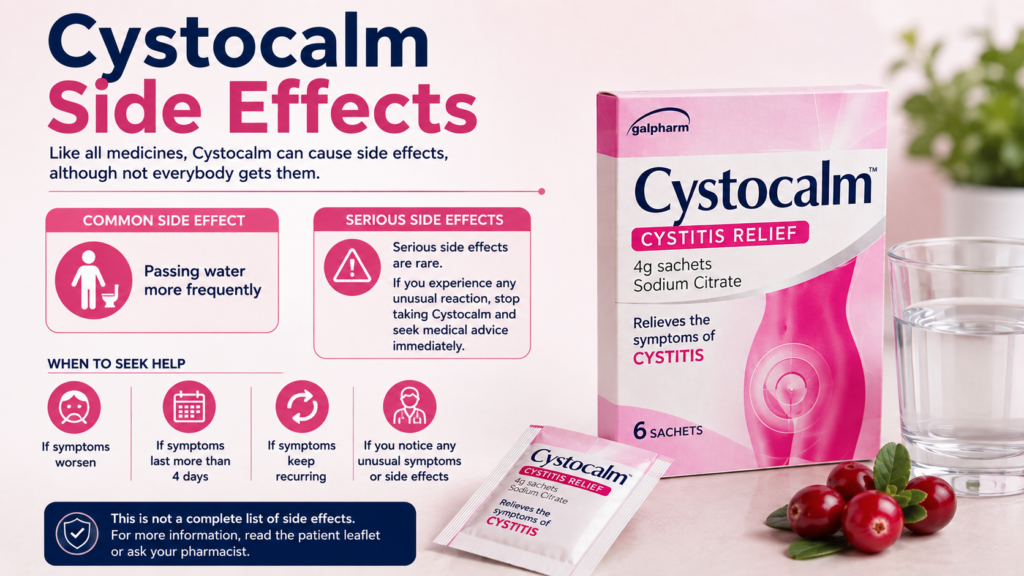
Most people do not experience problems with Cystocalm, but side effects can occur. The patient information leaflet lists passing water more frequently as a possible side effect.
Stop using the product and seek advice from a doctor or pharmacist if you experience an unusual reaction or are concerned about possible Cystocalm side effects. Side effects can also be reported through the UK’s Yellow Card Scheme.
When should you seek medical advice?
Get medical advice rather than relying only on Cystocalm if:
- Symptoms become severe or worsen.
- Symptoms continue after the recommended course.
- Symptoms keep coming back.
- You have symptoms that concern you or seem different from previous episodes.
- You are pregnant or breastfeeding.
- You have an underlying medical condition or take regular medicines.
The leaflet specifically highlights persistent or recurring symptoms as reasons to speak to a doctor.
Can Men Take Cystocalm?
One of the most important points about Cystocalm for men is that the UK patient leaflet says this medicine is not to be used by men or children.
Therefore, if you are searching can men take Cystocalm, the answer for this UK product is no. A man experiencing burning urination, urinary frequency or other possible UTI symptoms should seek advice from a healthcare professional rather than self-treating with Cystocalm.
This is particularly important because urinary symptoms in men can have different causes and may need appropriate assessment.
Cystocalm for Women
Cystocalm for women is the intended use described in the UK product information. It is specifically indicated for relief of the symptoms of cystitis in adult women.
The product is therefore different from a general UTI medicine suitable for everyone. Women who are pregnant or breastfeeding should seek medical advice before using it; the current leaflet says it should not be taken during pregnancy or breastfeeding.
Who Should Avoid Cystocalm?
Cystocalm is not suitable for everyone. The UK leaflet says it should not be taken by people who are allergic to its ingredients, have diabetes, heart disease, high blood pressure, kidney disease or a history of kidney disease, or are following a low-sodium diet. It also contains sucrose.
You should also speak to a doctor or pharmacist if you take medicines such as lithium or methenamine, as interactions may be relevant.
Cystocalm Reviews: What Do People Say?
Searches for Cystocalm reviews often reflect people’s personal experiences with symptom relief. Reviews can be useful for understanding how individual users feel about a product, but they should not be treated as medical evidence.
For example, recent customer reviews for Galpharm Cystocalm on Chemist4U include people reporting that they felt the product helped quickly, while another review described improvement during the first day. These are individual experiences rather than a guarantee that Cystocalm will work in the same way for everyone.
The best way to judge whether Cystocalm is appropriate is to consider the official patient information and, where necessary, speak to a pharmacist or doctor.
Where to Buy Cystocalm
People commonly search where to buy Cystocalm, Cystocalm Boots, Cystocalm Asda, Cystocalm Home Bargains and Cystocalm Amazon when looking for availability.
Availability can change, and the exact Galpharm-branded product may not always be listed by every retailer. For example, UK pharmacy and retail listings have carried Galpharm Cystocalm 6-sachet packs, while similar sodium-citrate cystitis relief products are also sold under other names.
If you are buying Cystocalm, check the active ingredient, dosage, pack information and current patient leaflet rather than relying only on the product name.
Cystocalm vs Other Cystitis Relief Products
Not every cystitis sachet contains the same active ingredient. For example, Cystocalm contains sodium citrate, while Cystopurin contains potassium citrate.
| Product type | Active ingredient | Main purpose |
|---|---|---|
| Cystocalm | Sodium citrate dihydrate | Symptomatic relief of cystitis |
| Cystitis relief products | May vary | Relief of burning/stinging |
| Antibiotic treatment | Depends on prescription | Treatment of certain bacterial infections |
This is why it is useful to check the actual ingredients rather than assuming every product labelled as cystitis relief works in exactly the same way.
Can Cystocalm Cure Cystitis?
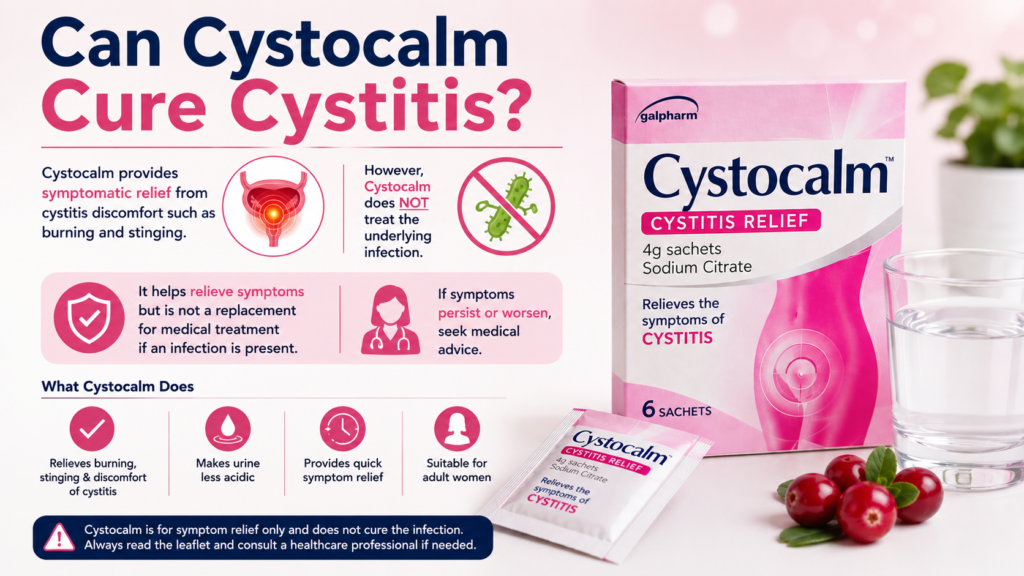
Cystocalm can help relieve symptoms, but it should not be described as a cure for the underlying infection. Its sodium citrate works by making urine less acidic, which can make cystitis symptoms more comfortable.
If your symptoms persist, worsen or repeatedly return, professional medical advice is more appropriate than repeatedly taking Cystocalm. Persistent urinary symptoms can require assessment to identify the underlying cause.
Cystocalm for Cats: Is It Safe?
Searches for Cystocalm for cats can be misleading. The human Cystocalm product described in the UK patient leaflet is intended for adult women and is specifically not recommended for men or children. It should not therefore be assumed to be suitable for cats or other animals.
If a cat has difficulty urinating, frequent urination, blood in the urine or appears distressed, contact a veterinarian promptly. Human medicines should not be given to pets unless a veterinary professional specifically advises you to do so.
Final Thoughts on Cystocalm
Cystocalm can be a useful option for the short-term relief of cystitis symptoms in adult women when used according to the UK product information. Its active ingredient, sodium citrate dihydrate, works by making urine less acidic and may reduce the discomfort associated with burning or stinging.
The key thing to remember is that Cystocalm is for symptom relief, not a replacement for medical treatment when an underlying UTI needs attention. It is not intended for men or children, and people with certain medical conditions, pregnancy, breastfeeding or relevant medicines should seek professional advice before use.
FAQs About Cystocalm
What is Cystocalm used for?
Cystocalm is used to relieve the symptoms of cystitis in adult women by making urine less acidic.
Does Cystocalm help UTI symptoms?
Cystocalm may relieve cystitis-related burning and stinging but does not treat the underlying infection.
How long does Cystocalm take to work?
The time needed for symptom relief varies, so there is no guaranteed timeframe for everyone.
Can men take Cystocalm?
No, the UK patient leaflet states that Cystocalm is not to be used by men or children.
What are the main Cystocalm ingredients?
The active ingredient is sodium citrate dihydrate, with sucrose, silica, saccharin sodium and cranberry flavour also listed.
What are the common Cystocalm side effects?
Passing water more frequently is listed as a possible side effect in the patient leaflet.
Can I use Cystocalm during pregnancy?
The UK leaflet advises against using Cystocalm during pregnancy or breastfeeding and recommends medical advice.
Can Cystocalm cure a UTI?
No, Cystocalm is intended to relieve cystitis symptoms rather than treat the underlying infection.